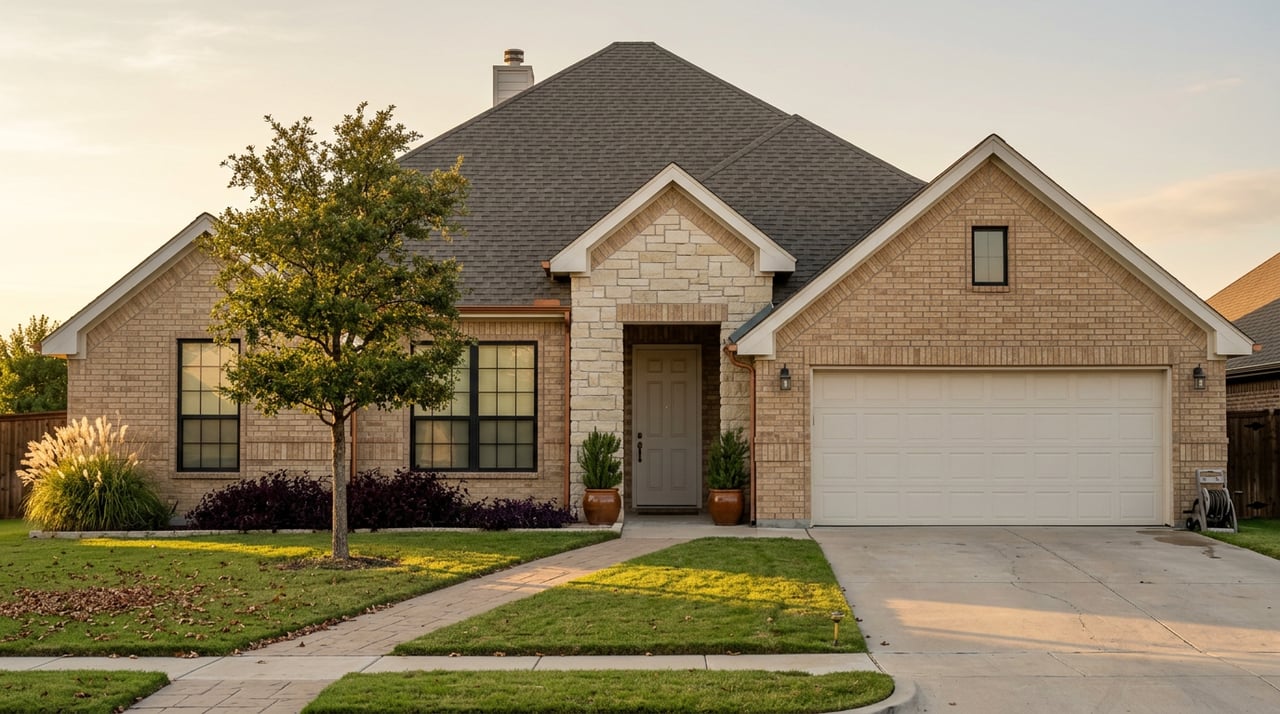
A seller in Westwood who checks the comps this month will see a number that looks reassuringly familiar. The median sale price in the neighborhood sat at $488,000 in March 2026, essentially flat compared to a year earlier. If pricing were the whole story, a listing today would behave the way it did last spring: a sign in the yard, a round of showings, an offer inside a few weeks.
That is not what is happening. According to Redfin's neighborhood data for Westwood, homes that sold in March 2026 spent an average of 131 days on the market before closing, more than double the 64 days homes took a year earlier. The price held. The clock did not. That gap between a stable number and a slower calendar is the part of this market that a headline median will never show you, and it is the part that changes how a seller should price and how a buyer should negotiate right now.
The Number on the Sign vs. the Number in the Calendar
League City as a whole is not telling the same story Westwood is. Looking at the same month for a clean comparison:
| Metric (March 2026) | Westwood | League City citywide |
|---|---|---|
| Median sale price | $488K, down 0.1% year over year | $400K, up 5.9% year over year |
| Average days on market | 131 days, up from 64 | 56 days, up from 47 |
| Homes sold | 15, up from 10 | 149, up from 124 |
Citywide, League City looks like a market that is warming: more sales, prices climbing, and only a modest stretch in how long homes take to sell. Westwood is the outlier inside that data set. Prices there have gone nowhere while the time it takes to get a home under contract has roughly doubled. A handful more homes sold than the year before, so it is not a neighborhood where nothing is moving. It is a neighborhood where each sale is taking longer to arrive, which is a very different problem for a seller to solve than a falling price would be.
Why a Flat Median Doesn't Mean a Flat Market
There is a second number buried in the same Redfin data that explains part of what is going on. The median sale price per square foot in Westwood rose 7.6% year over year to $191, even as the overall median sale price stayed essentially still. Those two facts only make sense together if the mix of what is actually selling has shifted. When price per square foot climbs while the headline price holds flat, it usually means smaller or more updated homes are the ones closing, while larger or more dated inventory sits and waits.
A recent closing on Westwood Drive gives that idea some texture. The home, a 2,504-square-foot, 3-4 bedroom Gehan Homes floor plan with granite countertops, real wood floors, a study with French doors, and a primary suite with dual vanities and a corner tub, listed at $449,000 and closed on June 30, 2026. Redfin's automated valuation put the home 8.1% above the average sale price of six comparable homes it used for the estimate, which came in around $410,000. That is well under the $488K median from just a few months earlier. It does not prove prices are collapsing, but it does show real spread underneath a median that looks calm from a distance. Some Westwood homes are still commanding a premium. Others, judged against their own comps, are landing meaningfully below where the neighborhood-wide number suggests they should.
The Real Competition Isn't the House Next Door
The more useful question is why buyers in Westwood are taking longer to commit when the price hasn't moved against them. Part of the answer is a few minutes down the road.
HAR.com's League City new-construction listings page put the citywide average price per square foot at $183 in June 2026, which sits below Westwood's resale price per square foot of $191 from that same spring. Buyers cross-shopping a decade-old Westwood resale against a brand-new home in one of the city's active master-planned communities are not always choosing the newer product because it is more expensive. In some cases they are choosing it because it is not.
Westland Ranch, a Forestar community built out by D.R. Horton, Ashton Woods, DRB Homes, and K. Hovnanian Homes, has also added Chesmar Homes to its builder lineup, and the community has been running active price cuts on quick move-in inventory. One Ashton Woods home originally priced at $438,810 is listed at $359,990 with an August 2026 availability date. A second, originally $529,258, is down to $489,990 for a September 2026 delivery. That is not a rounding error. That is a builder moving finished inventory with real discounts attached.
Legacy, an 805-acre master-planned community along FM 518 and West Ranch Boulevard, is building out with Coventry Homes and David Weekley Homes' Retreat Collection on 50-foot homesites. Samara, closer to the center of the city, is selling K. Hovnanian's Classic Collection and Wentworth Collection. Westwood itself continues to build out with D.R. Horton, CastleRock Communities, and Coventry Homes, so even inside the neighborhood, resale sellers are sometimes competing against a brand-new home built by the same company a few streets over.
None of this means Westwood resale is a hard sell. It means the buyer weighing a Westwood listing today has more brand-new, incentive-priced options nearby than they did two years ago, and that changes how quickly they move on a resale home that isn't priced or presented to compete with what is being built around it.
What This Means If You're Selling in Westwood Now
A few practical adjustments follow directly from this data:
- Price against current comparables, not last year's median. The neighborhood median is a lagging number built from homes that went under contract months ago. A more recent comp set, like the $410,000 average used for the June 30 closing on Westwood Drive, may sit well below the headline figure.
- Expect a longer runway. Pricing a home to sell in three weeks when the neighborhood average is closer to nineteen weeks sets up an unnecessary price reduction later. Build the marketing plan around the real timeline.
- Know what your buyer is comparing you to. If a new construction home five minutes away is offering a similar price per square foot with builder incentives on top, condition and presentation carry more weight than they did when Westwood resale had less nearby competition.
What This Means If You're Buying
Days on market of 131 in a neighborhood where prices haven't moved is a buyer's opening, not a red flag. It means there is room to negotiate on price, closing timeline, or repairs that would not have existed when homes were moving in 64 days. At the same time, it is worth running the comparison the other direction. If a comparable new home nearby is priced at or below what a Westwood resale is asking per square foot, and a builder is actively discounting inventory to move it before a set delivery date, that is a real alternative worth pricing out before making an offer, not just a marketing claim to take at face value.
Frequently Asked Questions
Is Westwood currently a buyer's market or a seller's market? Neither cleanly. Prices have held rather than fallen, which usually signals sellers still have some pricing power. But the average time to sell has more than doubled year over year as of March 2026, which hands buyers more room to negotiate than the price alone would suggest.
Why is League City overall showing rising prices while Westwood is flat? The citywide numbers for the same month, March 2026, show League City's median sale price up 5.9% year over year with only a modest increase in days on market. Westwood's flat pricing and doubled time on market suggest something specific to the neighborhood, most likely competition from nearby new-construction communities pricing comparably or lower on a per-square-foot basis, is offsetting the demand that is lifting prices elsewhere in the city.
If you're weighing a sale in Westwood or trying to figure out whether a resale home or a new build nearby makes more sense for your budget, that's exactly the kind of comparison worth working through with someone who tracks this market closely. Let's Connect with Carla Byrd to talk through what the current numbers actually mean for your specific situation.